


Your company just won two projects that start in the spring, and you need a project manager for each, a project accountant to handle billing and a safety manager who can cover both sites. The postings have been up for weeks, and the few applicants either lack construction experience or want far more than your budget allows.
That gap is common in construction right now. Craft shortages get most of the headlines, but the salaried roles that plan projects, track money and keep crews safe are just as hard to fill.
This post explains why contractors struggle to fill project, accounting and safety roles. It covers what recent industry surveys show, the specific reasons each role stalls, and how construction recruiters and contract talent can help.
Why Construction Recruiters See Salaried Roles Sit Open
Construction hiring challenges go beyond shortages of skilled tradespeople. Contractors also struggle to find the professionals who manage projects, control costs and maintain safety standards.
The AGC of America and NCCER 2026 Workforce Survey found that 82% of respondents had salaried openings. Among those firms, 87% said these positions were as hard or harder to fill than they had been a year earlier.
Nearly three-quarters of surveyed contractors expect to add employees over the next 12 months. At the same time, ABC's 2026 workforce shortage model, as reported by Construction Executive, estimates that the industry needs approximately 349,000 net new workers in 2026 and 456,000 in 2027.
Every new project needs someone to manage schedules, track costs and coordinate the safety plan. These responsibilities require years of experience, practical field knowledge and the ability to work with multiple teams.
What Makes These Seats Different
- Smaller talent pools: Contractors need candidates with both construction experience and the specific skills required for the position.
- Long ramp-up: New hires need time to understand project processes, subcontractors, systems and reporting requirements.
- High stakes: A poor hiring decision can affect project schedules, budgets, compliance and worker safety.
Construction Project Managers: Pulled Toward Megaprojects
Construction project managers oversee schedules, budgets, subcontractors, client relationships and change orders. They need to understand the work happening in the field while also managing the commercial side of a project.
That combination makes experienced project managers difficult to replace. They also have more employment options as large data center, manufacturing and infrastructure projects compete for the same professionals.
The AGC/NCCER survey found that 28% of respondents had performed data center work in the past year. Among those firms, 58% said data center projects had increased competition for skilled workers.
Large projects can offer bigger budgets, longer project timelines and higher compensation. This can make it harder for smaller contractors to attract experienced project managers.
The Bureau of Labor Statistics reported a median annual wage of $114,990 for construction managers in May 2025. Employment is projected to grow 9% from 2025 to 2035, with approximately 49,700 openings each year.
Where Project Manager Searches Stall
- Vague scope: Job descriptions do not explain project size, complexity or responsibilities.
- Pay behind market: Compensation does not match the experience or project responsibility required.
- Travel and schedule: Candidates are not given clear information about site locations, travel and working hours.
- Software gaps: Candidates may have project experience but lack familiarity with the contractor's systems.
Assistant project managers and project engineers are also in demand. Contractors need these professionals to support current projects and build a pipeline of future project managers.
Construction Accounting Roles Need a Rare Mix of Skills
Construction accounting involves more than general bookkeeping and financial reporting. Professionals in this field need to understand how project costs, billing schedules and contract terms affect a contractor's financial position.
Common responsibilities include job costing, progress billing, retainage, percentage-of-completion revenue recognition, lien waivers, certified payroll for public projects and union fringe reporting.
A general accountant may be able to learn these processes, but a busy contractor may not have enough time to train someone through a complete project cycle.
Location and compensation can create additional hiring challenges. Construction accounting candidates may also consider corporate finance and public accounting positions that offer hybrid schedules. Requiring full-time office attendance can narrow the available talent pool.
Accounting Roles That Stall Most Often
- Project accountants: Manage job costs, project billing, retainage and financial documentation.
- Construction controllers: Oversee financial reporting, work-in-progress schedules and accounting operations.
- Payroll specialists: Handle union reporting, certified payroll and complex workforce pay requirements.
- Accounts payable leads: Manage subcontractor invoices, vendor payments and project-related expenses.
When these positions remain vacant, billing can be delayed, cash flow becomes tighter and work-in-progress reporting may become less accurate. Bonding companies and lenders may also notice problems in financial reporting.
Our finance and accounting staffing team recruits professionals for these specialized roles.
Construction Safety Roles: High Stakes, Short Supply
Construction safety managers and coordinators develop safety programs, train crews, inspect job sites and investigate incidents. They also help contractors meet OSHA requirements and project-owner expectations.
Larger construction projects often require dedicated safety staff. Megaprojects may need entire safety teams, creating additional competition for candidates with the right certifications, field experience and communication skills.
The AGC/NCCER survey found that 50% of respondents said candidates lacked the required skills, certificates or licenses. Newer workers may also need more training and supervision before they can work independently.
What Contractors Want in Safety Hires
- Construction-specific job-site experience.
- Relevant certifications and OSHA training.
- The ability to train crews and earn the respect of field teams.
- Experience with incident investigation and reporting.
- Ability to coordinate safety requirements across multiple sites and subcontractors.
When a safety position remains vacant, superintendents and foremen may need to take on additional safety responsibilities. This can increase their workload and create gaps in day-to-day safety oversight.
What Open Salaried Roles Cost Contractors
An open project management, accounting or safety position can affect more than the hiring budget. The longer a role stays vacant, the more pressure it can place on active projects and existing employees.
Where the Costs Show Up
- Project delays: Missing project leadership can slow decisions, coordination and scheduling.
- Margin erosion: Poor cost tracking and delayed change orders can reduce project profitability.
- Cash flow problems: Billing delays and inaccurate job costing can affect incoming payments.
- Safety exposure: Gaps in safety oversight can increase operational and compliance risks.
- Burnout: Existing employees take on additional responsibilities while positions remain open.
- Lost bids: Contractors may hesitate to pursue new projects when they do not have enough experienced staff.
The AGC/NCCER survey found that 74% of respondents had experienced at least one significant project delay in the previous year. Among those firms, 42% cited worker shortages as a contributing factor.
SHRM's 2025 recruiting benchmarks put median time-to-fill at approximately a month and a half. Senior construction positions can take longer because experienced candidates are limited and often already employed.
Construction Recruiters Compare Project, Accounting and Safety Roles
Different construction positions require different hiring approaches. Understanding the responsibilities and candidate requirements can help contractors choose between direct hire, contract and contract-to-hire arrangements.
| Role | Core Responsibilities | Why It's Hard to Fill | Hiring Model That Often Fits |
|---|---|---|---|
| Project Manager | Schedule, budget, subcontractors and owner relationship | Megaproject competition and long ramp-up | Direct hire, contract for project starts |
| Project Engineer or APM | Submittals, RFIs, documentation and cost tracking | Pipeline for project managers; candidates get recruited quickly | Direct hire or contract-to-hire |
| Project Accountant | Job costing, progress billing and retainage | Rare skill mix and competition with corporate finance | Direct hire, contract during vacancies |
| Construction Controller | WIP, financial reporting and bonding | Small pool of experienced senior candidates | Direct hire, interim contract |
| Safety Manager | Safety programs, training, inspections and incidents | Owner requirements and certification needs | Direct hire, contract for new sites |
How Construction Recruiting Improves With Better Job Descriptions
A job description should help experienced construction professionals understand what they will manage, where they will work and what the contractor expects from them. General descriptions make it harder for candidates to assess whether a position is right for them.
Include These Details
- Project types and sizes: Explain whether the work involves commercial interiors, healthcare, public infrastructure or other projects. Include typical contract values, such as $10 million to $50 million.
- Delivery methods: Mention design-bid-build, design-build or construction management at risk.
- Systems: Identify the project management, accounting and reporting software used by the company.
- Territory and travel: Explain the expected travel distance, site locations and schedule.
- Team: Describe who the candidate will report to and which employees they will manage or work alongside.
- Pay and benefits: Provide a realistic compensation range and explain bonuses, vehicle allowances and other benefits.
- Growth path: Explain opportunities for advancement and professional development.
A Short Example
A $150 million commercial general contractor in the Southeast needs a project manager to run two or three projects, typically valued between $15 million and $40 million. Projects focus on healthcare and education and use the construction management at-risk delivery method. The PM reports to the operations director and works with a dedicated superintendent and project engineer. Travel is limited to a maximum one-hour drive. Compensation includes a salary range, vehicle allowance and performance bonus.
Details like these help candidates understand the actual role before applying. They also help recruiters screen out applicants whose experience or expectations do not match the position.
Have the hiring manager review the job description before publishing it. A short conversation about project scope, team structure and compensation can prevent weeks of mismatched applications.
Six Construction Recruiting Steps to Fill Salaried Roles Faster
Contractors can improve hiring results by making the process more specific and reducing unnecessary delays. These six steps can help bring qualified candidates into the process faster.
- Write role-specific descriptions: Include project details, responsibilities, required experience, software and compensation.
- Benchmark the full offer: Review salary, bonuses, vehicle allowances, benefits, travel and working conditions against the market.
- Make decisions quickly: Plan interviews in advance and provide feedback without unnecessary delays.
- Promote internally: Consider assistant project managers, project engineers and accounting employees who are ready for additional responsibility.
- Use contract talent: Bring in experienced professionals when projects start, vacancies occur or workloads increase.
- Work with specialized construction recruiters: Reach professionals who may not be actively applying for jobs and assess their experience against the actual requirements.
Experienced project managers and controllers may receive counteroffers when they resign. A slow hiring process gives their current employer more time to retain them. A clear process and timely offer can make a meaningful difference.
Interview Questions Construction Recruiters Use for Salaried Roles
Interview questions should reveal what a candidate has actually managed, the decisions they have made and how they handle problems. Asking about specific projects and situations is more useful than relying only on general experience statements.
For Project Managers
- What was the largest project you managed? What was the contract value, delivery method and final margin?
- Tell us about a change order dispute you handled. How did you resolve it?
- What steps did you take when a subcontractor fell behind schedule?
For Construction Accountants
- How do you prepare and review a work-in-progress schedule?
- How have you handled progress billing when retainage or pending change orders were involved?
- Which construction accounting systems have you used, and what improvements have you made to the process?
For Safety Managers
- Describe an incident investigation you handled. What changed after the investigation?
- How do you get cooperation from foremen or subcontractors who resist safety requirements?
- How do you train new workers and confirm that they understand site safety expectations?
Add a Practical Exercise
A short practical exercise can help verify a candidate's knowledge without making the interview process unnecessarily long.
- Project manager: Review a sample project schedule and identify the biggest risks.
- Accountant: Review a simple job cost report and explain what needs attention.
- Safety manager: Review a site photograph and identify potential hazards.
Keep the exercise to approximately 30 minutes and use it consistently for candidates applying to the same position.
Contract Talent for Project Starts, Vacancies and Peaks
Construction workloads change as projects move through different stages. A contractor may need additional project management, accounting or safety support for a specific period without adding another permanent position.
Contract professionals can help fill that gap. Contractors can bring in experienced people for a defined period, while contract-to-hire arrangements provide an opportunity to evaluate a candidate before making a permanent hiring decision.
Good Uses for Contract Talent
- Project managers and engineers: Support new project starts or provide coverage while a permanent employee is being hired.
- Project accountants: Help during vacancies, accounting software conversions or heavy billing periods.
- Interim controllers: Maintain financial reporting and accounting operations while the company searches for a permanent leader.
- Safety managers: Provide support for new sites, owner requirements or employee leave.
- Document control and estimating professionals: Help manage additional work during busy bidding periods.
Contract support can protect the permanent team from excessive workloads. It can also help reduce burnout and the risk of losing experienced employees while projects are active.
Keeping Salaried Construction Staff After You Hire Them
Filling a position is only part of the challenge. Contractors also need to create working conditions that encourage experienced professionals to stay with the company.
Pay is important, but workload, career growth, leadership and workplace respect also influence whether employees remain in a role.
Retention Steps That Help
- Set realistic workloads: Avoid assigning too many projects or responsibilities to one employee.
- Show a career path: Explain how employees can move into senior project, finance or safety positions.
- Provide training: Support professional development, certifications and software training.
- Recognize performance: Acknowledge employees who help deliver projects successfully.
- Review pay annually: Compare salaries and benefits with current market expectations.
- Schedule leadership check-ins: Give employees an opportunity to discuss challenges, workload and career goals.
The AGC/NCCER survey found that most firms had increased base pay for hourly craft workers and salaried employees by as much as or more than the previous year. Compensation matters, but long-term retention also depends on growth opportunities, manageable workloads and respect from leadership.
How VALiNTRY Works With Contractors as Construction Recruiters
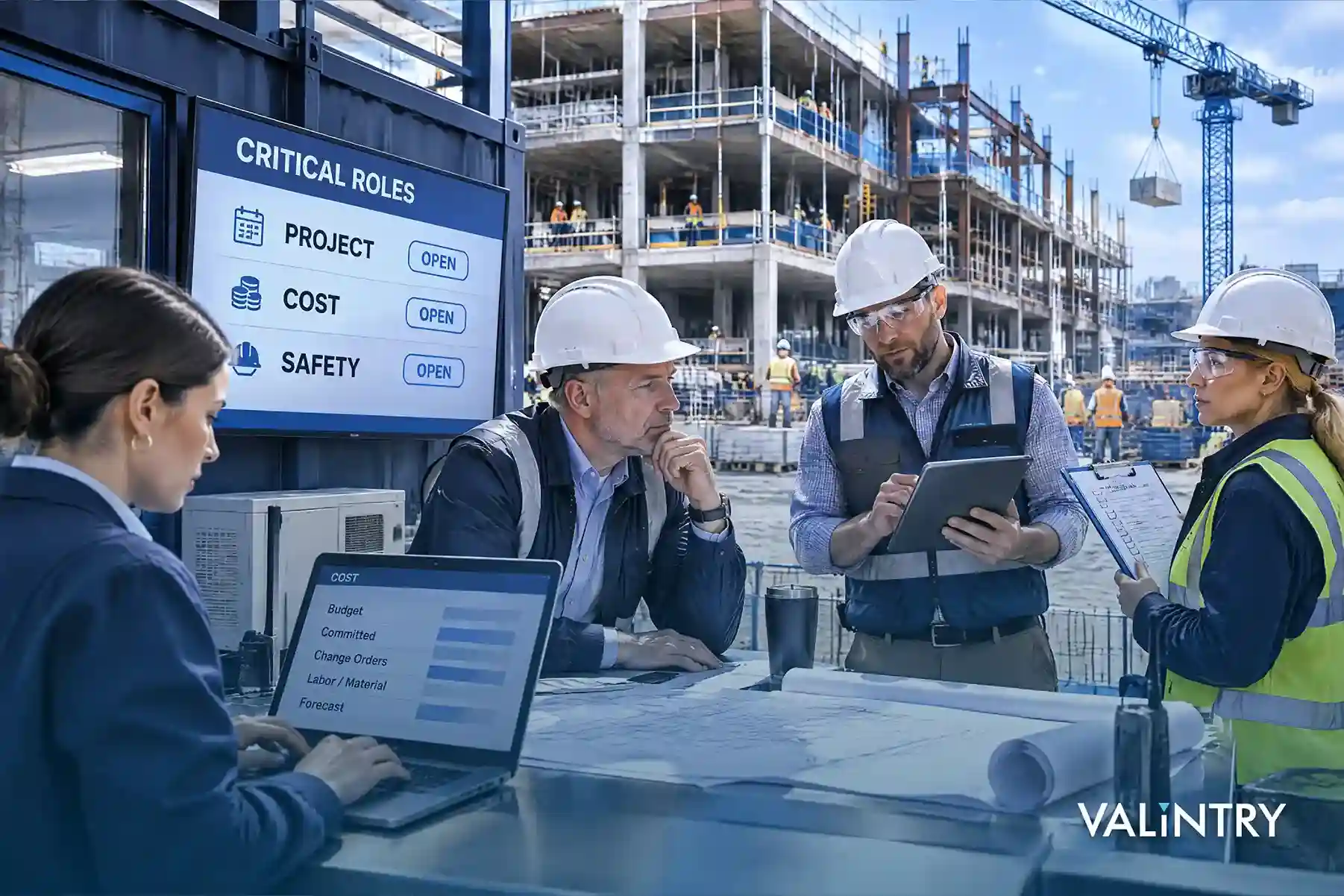
VALiNTRY helps general contractors, specialty contractors and construction companies find experienced professionals for project management, engineering, finance, accounting and safety positions. We understand that every construction project has different staffing requirements, timelines and skill needs.
Our recruitment process starts with understanding your project scope, contract size, delivery methods, software requirements, location and team structure. This helps us identify candidates with relevant construction industry experience rather than relying only on general job qualifications.
We connect contractors with qualified professionals, including project managers, assistant project managers, project engineers, project accountants, construction controllers and safety managers. Our team evaluates candidates based on their technical knowledge, project experience and ability to meet your business requirements.
Whether you need a permanent employee, temporary project support or a professional who could transition into a full-time position, VALiNTRY offers flexible staffing solutions:
- Direct Hire: Find experienced construction professionals for permanent positions.
- Contract Staffing: Add skilled professionals to support project starts, employee vacancies and increased workloads.
- Contract-to-Hire: Evaluate a candidate's skills and performance before making a permanent hiring decision.
From identifying qualified candidates to supporting onboarding and payroll for contract engagements, VALiNTRY helps simplify the recruitment process so contractors can focus on project delivery.
Explore our staffing solutions to discuss your construction hiring requirements.
Fill Your Project, Accounting and Safety Seats Before the Next Job Starts
Construction project management, accounting and safety roles remain difficult to fill because they require a combination of field knowledge, office skills and hands-on experience. As projects grow and competition for experienced professionals increases, leaving these positions open can affect schedules, costs and daily operations.
Clear job descriptions, competitive offers and faster hiring decisions can help contractors close the gap. Contract talent can also provide support during project starts, employee vacancies and periods of increased demand.
VALiNTRY can help construction companies recruit experienced professionals through permanent and contract staffing solutions.
Talk to Our Construction Recruiters
Construction Recruiters FAQ
1. What Do Construction Recruiters Do?
Construction recruiters help general contractors and construction companies find and screen professionals for roles such as project managers, project engineers, project accountants, controllers and safety managers. They reach qualified candidates, assess relevant skills and help employers move through the hiring process.
2. Why Is It Hard for Contractors to Fill Salaried Roles?
These positions require a combination of field experience and office skills. The available talent pool is limited, and large megaprojects compete for experienced professionals. Some positions also require specific certifications or licenses. The AGC/NCCER 2026 survey found that 87% of firms with salaried openings said those roles were as hard or harder to fill than the previous year.
3. How Much Do Construction Project Managers Earn?
The Bureau of Labor Statistics reported a median annual wage of $114,990 for construction managers in May 2025. Actual compensation varies by region, project type, company size and experience. Large data center, healthcare and infrastructure projects may offer additional compensation, bonuses or vehicle allowances.
4. What Skills Should a Construction Accountant Have?
Construction accountants should understand job costing, progress billing, retainage, percentage-of-completion revenue recognition, work-in-progress reporting, lien waivers and construction-related financial documentation. Experience with certified payroll, union reporting and construction accounting software is also valuable.
5. What Should Contractors Look for in Construction Recruiters?
Contractors should look for recruiters who understand construction project types, delivery methods, accounting requirements and safety responsibilities. Good recruiters ask detailed questions about the role, understand market compensation and can support both permanent and contract hiring.
6. How Long Does Construction Recruiting Take for Senior Roles?
Senior construction searches can take several weeks or longer, depending on the role, location, compensation and availability of qualified candidates. SHRM's 2025 recruiting benchmarks put median time-to-fill at approximately a month and a half. Experienced project managers, controllers and safety professionals may take longer to recruit. Specialized recruiters and contract support can help reduce the impact of vacancies.
7. Should Contractors Use Contract Project Managers and Accountants?
Contract project managers and accountants can be useful during project starts, employee vacancies, software conversions and heavy billing periods. They work for a defined period under the contractor's direction, while the staffing firm can support onboarding and payroll. Contract-to-hire is another option when a company wants to evaluate a professional before making a permanent offer.
8. How Do Data Center Projects Affect Construction Hiring?
Data center projects increase competition for experienced construction professionals, including project managers and other skilled workers. The AGC/NCCER 2026 survey found that 58% of firms performing data center work reported increased competition for skilled workers, while 49% reported increased wage pressure. Contractors outside the data center sector may need to review their compensation and hiring timelines to remain competitive.