

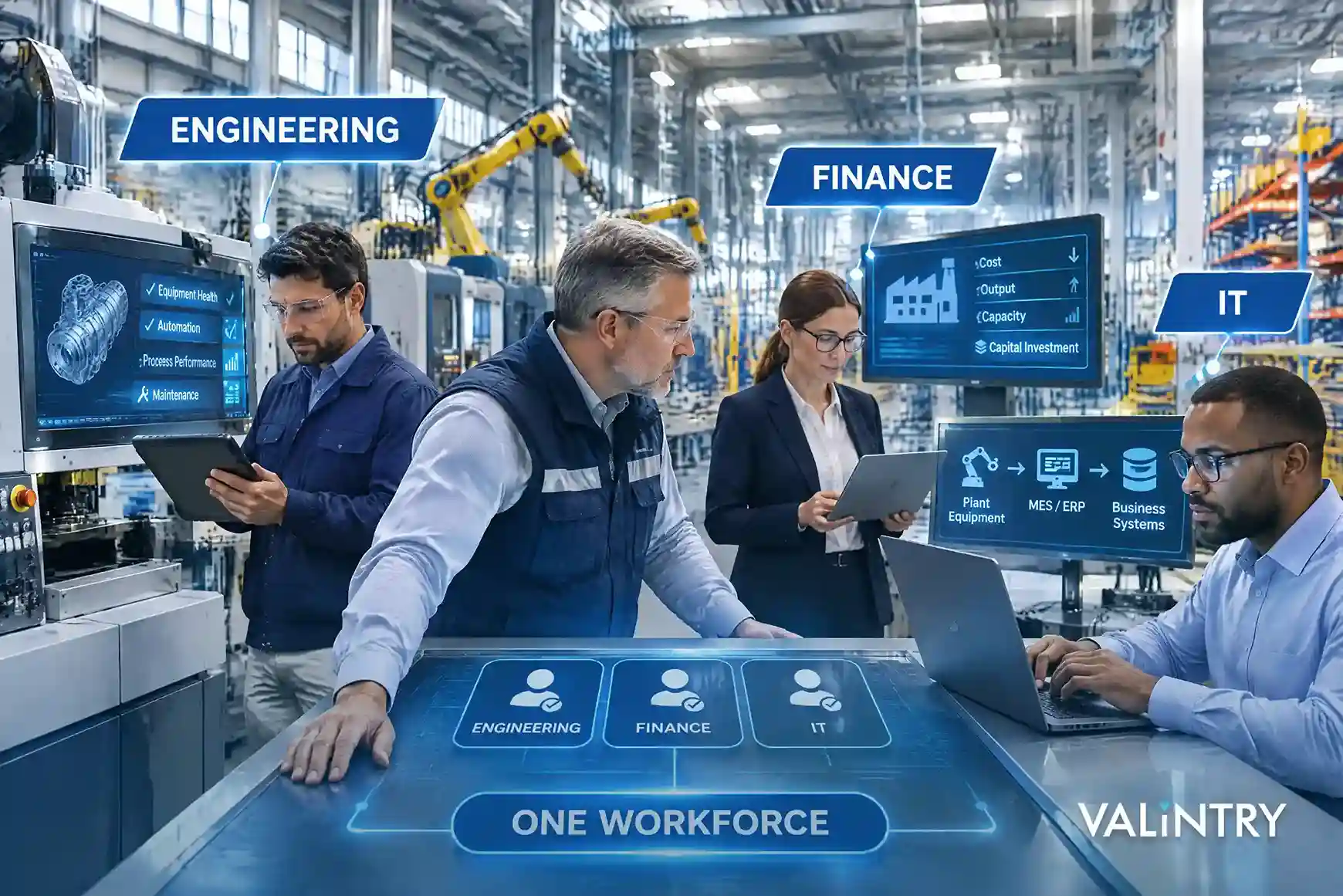
Your plant has a manufacturing engineer opening, a cost accountant opening and an ERP analyst opening. All three have been posted for weeks. Production hiring is moving, but these three seats sit empty while projects, month-end closes and system upgrades wait on the people who should own them.
That pattern is common across U.S. manufacturing. Frontline hiring gets the most attention, yet professional roles that keep a plant improving, reporting and running its systems are often the hardest to fill.
This post explains why engineering, finance and IT roles in manufacturing sit open and what to do about it, from current data to the hiring models that fit each role.
Manufacturing Hiring Has Improved, but Professional Roles Lag Behind
Headline numbers show a more active market than a year ago. The Bureau of Labor Statistics Employment Situation report for October 2026 showed manufacturing employment up by 19,000 jobs for the month. Data from the September 2026 JOLTS release puts manufacturing job openings at 584,000, up 54,000 from the month before.
Confidence has improved too. In the National Association of Manufacturers' third-quarter 2026 Manufacturers' Outlook Survey, 78.9% of respondents said they were positive about their company's outlook, up from 74.2% in the second quarter. Manufacturers also expected sales, production and capital investment to grow over the next 12 months.
Rising demand puts more pressure on professional roles. New lines need engineers, more volume needs cost and inventory accounting, and upgraded systems need IT and OT staff. Those roles have smaller talent pools than production jobs, so they fall behind first when hiring picks up.
Why These Seats Get Overlooked
- Volume hides them. A plant with 40 open production jobs and three professional openings tends to focus on the 40.
- Corporate templates don't fit. Job descriptions written at headquarters often miss what the plant role really involves.
- Pay bands lag. Plant pay ranges are often set against other plants, not against the tech and corporate employers that compete for the same people.
Manufacturing Hiring for Engineers: Why the Seats Stay Empty
Engineering seats at plants are some of the hardest professional roles to fill. Manufacturing, process, quality, controls and reliability engineers all have options well beyond your industry.
Competition is the first reason. Data center builders, semiconductor fabs, aerospace programs and utilities all hire the same mechanical, electrical and industrial engineers. Many offer newer facilities, hybrid schedules or bigger project budgets.
Plant expansions add to demand. Census Bureau data on manufacturing construction spending shows that factory construction peaked in 2024 and has since cooled, but many of the plants built during that run are now starting production. Each one needs engineers to bring lines up to rate, solve quality problems and keep equipment running.
Engineering Roles That Stall Most Often
- Manufacturing and process engineers who can launch new products and improve existing lines
- Controls and automation engineers who program PLCs and integrate robotics
- Quality engineers with industry-specific standards, such as automotive or medical device requirements
- Reliability and maintenance engineers who run predictive maintenance programs
- Plant engineers who can manage facilities, utilities and capital projects at once
Our posts on hiring a plant engineer and working with industrial engineering recruiters cover two of these roles in more detail.
Manufacturing Hiring for Plant Finance and Accounting Roles
Finance roles at plants have their own challenges. Cost accountants, plant controllers and inventory analysts need accounting skills plus a working knowledge of how products are made.
The first challenge is location. Many plants sit outside major metro areas, while experienced accountants cluster in cities where corporate and public accounting jobs are plentiful. A plant controller role that requires five days on site in a small town competes against hybrid corporate roles an hour or two away.
The second is skill mix. A strong plant accountant understands standard costing, variance analysis, inventory valuation and the ERP system that ties them together. General accountants can learn this, but it takes time that a busy close calendar rarely allows.
Finance Roles That Stall Most Often
- Plant controllers who own the site's financial results and work closely with operations
- Cost accountants who maintain standard costs and explain variances
- Inventory and supply chain analysts who reconcile physical and system counts
- FP&A analysts who model capacity, pricing and capital projects
When these seats stay empty, the close slips, cost variances go unexplained and leadership makes decisions with less reliable numbers. Our finance and accounting staffing team places these roles for manufacturers.
Why IT and OT Roles Stall in Manufacturing Hiring
Modern plants run on connected systems, which puts IT and operational technology roles near the top of the hard-to-fill list.
The work spans two worlds. ERP and manufacturing execution systems connect orders, inventory and production. Plant floor networks connect machines, sensors and controls. Each needs people who understand both the technology and how a plant runs day to day.
Manufacturers are adding AI and data tools on top. The NAM's second-quarter 2026 survey write-up found that 42.1% of respondents train workers on using AI for quality, production, maintenance or logistics tasks. Those programs need data engineers, analysts and IT staff to support them.
IT and OT Roles That Stall Most Often
- ERP analysts and administrators who configure and support production, inventory and finance modules
- MES specialists who connect the plant floor to business systems
- OT security specialists who protect plant networks and control systems
- Data engineers and analysts who turn machine and quality data into decisions
- Infrastructure and network engineers for multi-site manufacturers
These candidates often compare your offer with software, finance and healthcare employers that pay well and allow remote work. A plant role that explains the systems, the projects and the hybrid options in plain terms has a much better chance. Our IT staffing team recruits for these roles.
What the Manufacturing Workforce Data Signals for 2027
Workforce challenges in manufacturing aren't new, but the mix is changing. The NAM notes in its article on the Manufacturing Institute's workforce training survey that attracting and retaining employees topped the list of business concerns 64% of the time in its quarterly outlook surveys between 2018 and 2024. In the first quarter of 2026, 44.7% of respondents still cited it.
That drop doesn't mean the problem went away. It means other pressures, such as input costs, healthcare costs and trade uncertainty, rose alongside it. For professional roles, the talent challenge often grows as companies invest in automation, new plants and new systems that require more specialized people.
Signals Worth Watching
- New plants reaching full production will need engineers, quality staff and plant finance teams.
- Automation and AI projects will keep demand high for controls, data and OT security talent.
- Rising confidence usually leads to more capital projects, which need project engineers and analysts.
- Retirements continue to pull experienced plant engineers and controllers out of the workforce.
Plants that plan these hires a quarter or two ahead will find the market easier than those that start searching after a project begins.
A simple workforce plan helps. List the projects, launches and system changes scheduled for the next 12 months, then note which engineering, finance and IT skills each one needs and when.
The Real Cost of Slow Manufacturing Hiring for Professional Roles
An empty professional seat rarely shows up as a line item, but plants pay for it in other ways.
Without a manufacturing engineer, line improvements stall and scrap or downtime problems stay unsolved longer. A missing cost accountant means variances go unexplained and pricing decisions rest on older standard costs. Leave an ERP or OT role empty, and system projects slip while security gaps stay open.
Where the Costs Show Up
- Overtime and burnout for the engineers, accountants and IT staff covering the gap
- Delayed projects, including product launches, capital installs and system upgrades
- Quality and safety risk when process changes don't get proper engineering review
- Weaker decisions when financial reporting is late or less accurate
- Turnover among the people covering, which can turn one opening into two
Time matters here. SHRM's 2025 recruiting benchmarks put the median time to fill across roles at about a month and a half, and specialized plant roles often take longer. Every extra week adds to the costs above.
What a Strong Manufacturing Job Description Includes
Generic job descriptions are one of the most common reasons professional manufacturing searches stall. Candidates want to know what they'll work on day to day, along with the degree and experience you expect.
Include These Details
- Products and processes: What the plant makes and how, such as machining, molding, assembly or batch processing.
- Equipment and systems: The lines, controls platforms, ERP and MES systems the person will touch.
- Projects: The launches, expansions or improvements planned for the first year.
- Team: Who the person reports to and works with, on the floor and in the office.
- Schedule: On-site days, shift coverage expectations and any hybrid flexibility.
- Pay and benefits: A real range, bonus practices and relocation support.
A Short Example
"Our 300-person plant makes molded components for medical device customers. This process engineer will own two injection molding cells, lead scrap reduction projects and support a new line launching next spring. The role reports to the engineering manager, works on site four days a week and pays [range] plus an annual bonus."
A few sentences like these tell a strong candidate more than a page of generic requirements.
Ask the hiring manager to review every posting before it goes live. Plant managers and engineering leads know which details matter to candidates, and they'll catch requirements copied from an old template that no longer fit the role.
Fixing Manufacturing Hiring for Professional Roles: Seven Steps
Most stalled professional searches can be restarted with a few focused changes.
- Write the job description at the plant. Have the hiring manager describe the products, equipment, systems and projects the person will own.
- Benchmark the full offer. Compare base pay, bonus, schedule flexibility and relocation support against the employers you really compete with for talent.
- Explain the schedule plainly. Say which days need to be on site and whether hybrid work is possible for analysis, reporting or design.
- Speed up interviews. Combine a plant tour, technical interview and team meeting into one visit, and give feedback within two days.
- Offer relocation help. Many strong candidates will move for the right role, especially with help on housing and temporary living costs.
- Build internal pathways. Technicians, operators and junior analysts can grow into engineering and finance roles with support.
- Use a specialized recruiter. Recruiters who work across engineering, finance and IT can reach passive candidates who don't respond to postings.
These steps work best together. A sharper job description brings better applicants, a faster process keeps them interested and a fair, clear offer closes the hire.
Onboarding Professional Hires for the Long Term
Plants work hard to fill professional seats, then sometimes lose new hires in the first year. A structured start helps them become productive and stay.
A Practical First 90 Days
- Before day one: Set up system access, safety training and a desk or workspace near the people they'll support.
- First two weeks: Walk the full process, meet operations, quality, maintenance and finance leads, and review current metrics.
- First month: Assign one contained project with a clear finish, such as a line study, a cost variance review or a system fix.
- Months two and three: Expand ownership, set goals for the year and schedule a check-in with the plant manager.
Pair each new hire with a peer who knows the plant well, and give them a regular chance to share what's slowing them down. Engineers, accountants and IT staff who feel connected to the floor and to leadership are far more likely to stay through the next project.
Direct Hire, Contract or Contract-to-Hire for Plant Professional Roles
Not every professional seat needs the same hiring model. Matching the model to the work saves time and money.
| Role | When Direct Hire Fits | When Contract Fits |
|---|---|---|
| Manufacturing or process engineer | Ongoing ownership of lines and products | New product launches, line moves, capacity projects |
| Controls and automation engineer | Ongoing support for plant systems | Robotics integrations, PLC migrations, commissioning |
| Plant controller or cost accountant | Long-term ownership of the site's numbers | Close support during a vacancy, ERP conversions, audits |
| ERP or MES analyst | Ongoing system ownership | Implementations, upgrades, data clean-up |
| OT security specialist | Ongoing program ownership | Assessments, network segmentation projects |
Contract-to-hire works well when a plant isn't sure a role will last or wants to see how a person fits the culture before committing. Many plants use it for a first ERP analyst or a new controls engineer role, where the scope may change once the work starts.
It also helps in tight markets, since some professionals prefer to try a role before making a permanent move.
How VALiNTRY Supports Manufacturing Hiring Across Engineering, Finance and IT

We recruit engineering, finance and IT professionals for manufacturers of every size, from single plants to multi-site operations. Because our teams cover all three areas, we can support a plant's full professional hiring plan instead of one role at a time.
Each search starts with the plant: the products, equipment, systems, schedule and the people the new hire will work with. Our recruiters then reach candidates who've done that work, including many who aren't actively looking, and screen them on the specific skills the role needs.
We place professionals on a direct hire, contract or contract-to-hire basis. For launches, implementations and vacancies, we can supply contract engineers, accountants and IT specialists who work under your direction, with onboarding and payroll handled on our side. Learn more on our engineering staffing page.
Fill Your Plant's Engineering, Finance and IT Seats
Manufacturing hiring is picking up, and professional roles are where plants feel the pressure first. Clear job descriptions, competitive offers, faster interviews and the right hiring model for each role will close the gap.
VALiNTRY can help you plan and fill your plant's engineering, finance and IT roles with permanent or contract talent. Tell us what you need, and we'll start the search.
Start Your Manufacturing Search
Manufacturing Hiring FAQ
Why Do Engineering, Finance and IT Roles Sit Open in Manufacturing?
Engineering, finance and IT roles sit open in manufacturing because they compete with technology firms, data center builders, corporate offices and other industries for the same professionals. Plant locations, on-site schedules, lagging pay bands and generic job descriptions narrow the pool further. Slow interview processes then lose candidates who have other offers.
Is There a Manufacturing Talent Shortage?
Manufacturers have reported a persistent talent shortage for years. The NAM reports that attracting and retaining employees was the top concern in its quarterly outlook surveys 64% of the time between 2018 and 2024, and 44.7% of respondents still cited it in the first quarter of 2026. Professional roles such as engineers, controllers and OT specialists are among the hardest to fill.
How Is Manufacturing Hiring Trending in 2026?
Manufacturing hiring improved in late 2026. According to the BLS, manufacturing added 19,000 jobs in October 2026, and manufacturing job openings reached 584,000 in September. The NAM's third-quarter survey found 78.9% of manufacturers positive about their outlook, the highest share since 2022.
What Manufacturing Engineering Roles Are Hardest to Fill?
The hardest manufacturing engineering roles to fill are typically manufacturing and process engineers, controls and automation engineers, quality engineers with industry-specific standards, reliability engineers and plant engineers. Each competes with data centers, semiconductors, aerospace and utilities for the same people.
How Can Manufacturers Hire Plant Controllers and Cost Accountants Faster?
Manufacturers can hire plant controllers and cost accountants faster by writing role-specific job descriptions, benchmarking pay against corporate and public accounting roles, offering hybrid options where possible and providing relocation help. Contract accountants can cover the close during a vacancy so the permanent search doesn't have to be rushed.
How Long Does Manufacturing Hiring Take for Professional Roles?
Manufacturing hiring for professional roles often takes longer than for production jobs. SHRM's 2025 recruiting benchmarks put the median time to fill across all roles at about a month and a half, and specialized engineering, plant finance and OT roles can take longer. Clear job descriptions, competitive offers and fast interviews shorten the search.
Should Manufacturers Use Contract Engineers and IT Staff?
Manufacturers should use contract engineers and IT staff for projects with a clear start and finish, such as product launches, robotics integrations, ERP implementations and commissioning. Direct hire fits roles that own lines, systems or financial results long term. Contract-to-hire works when a plant wants to evaluate a professional before a permanent offer.
How Does a Staffing Partner Help With Manufacturing Hiring?
A staffing partner helps with manufacturing hiring by reaching passive engineering, finance and IT candidates, screening them on plant-specific skills and keeping the interview process moving. Partners that cover all three areas can support a plant's full professional hiring plan, and they can supply contract professionals for projects and vacancies.