

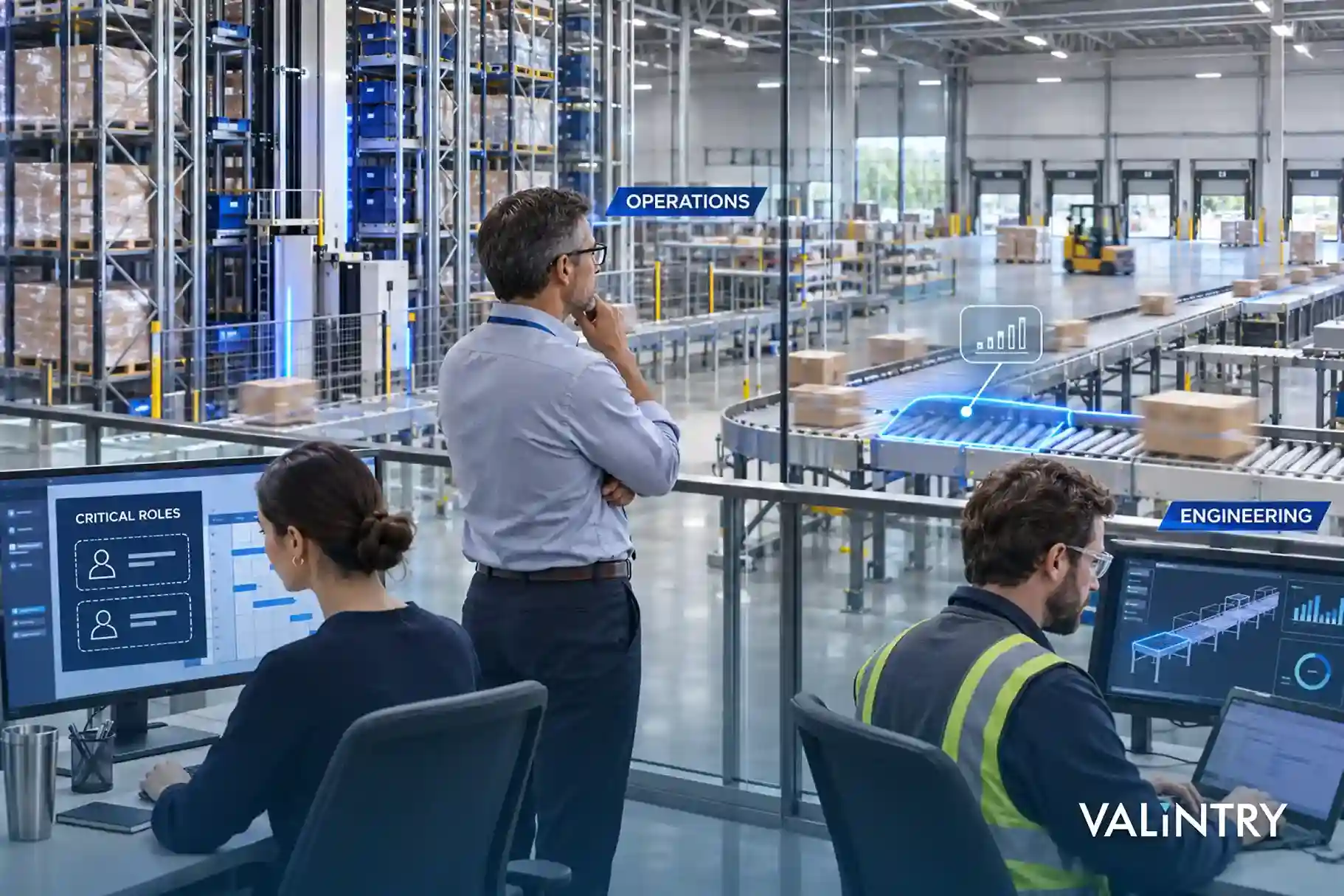
Distribution center floor staffing may be steady, but that does not mean every position is easy to fill. A transportation analyst opening can remain vacant while freight costs increase. A warehouse management system (WMS) upgrade may be delayed because there is no experienced owner. A controls engineer may be difficult to find when a new sortation system needs support.
Floor hiring often receives the most attention because distribution companies need enough people to keep daily operations moving. However, office and engineering positions are just as important. These professionals influence transportation costs, inventory accuracy, warehouse productivity, technology investments and customer service.
For distribution companies, the challenge is finding people who understand both the technical requirements of a role and how a live logistics operation works.
Why Logistics Recruiters See Office Roles Sit Open While Floor Hiring Eases
Distribution companies are dealing with a different hiring challenge than they were a few years ago. Warehouse floor staffing has become more manageable for many employers, but professional roles requiring technical, analytical and operational experience remain difficult to fill.
Industry reporting on the logistics sector points to easing warehouse labor shortages while highlighting continued demand for higher-skilled technical professionals. At the same time, technology adoption is changing how distribution networks operate. Automation, data analytics and artificial intelligence are becoming part of everyday logistics planning and execution.
The Bureau of Labor Statistics projects employment for logisticians to grow by 18% between 2025 and 2035. The median annual wage was $82,320 in May 2025, with approximately 26,600 openings projected each year over the decade.
Why the Hiring Gap Continues
- Specialized skill combinations: Employers need people who understand logistics operations and can also work with systems, data, engineering processes or financial reporting.
- Competition across industries: Distribution companies compete with manufacturers, retailers, technology companies, consulting firms and systems integrators for the same professionals.
- Changing technology requirements: WMS upgrades, transportation platforms, warehouse automation and analytics tools require skills that are not always available in the local talent market.
- Operational complexity: Candidates must understand how their decisions affect receiving, inventory, picking, shipping, transportation and customer service.
This is why distribution companies need a more focused recruiting approach for office and engineering positions rather than relying on the same hiring methods used for warehouse floor roles.
Logistics Office Roles That Stall Most Often
Professional logistics positions connect daily warehouse activity with business planning and financial performance. When these positions remain open, companies may struggle to understand costs, improve processes or make timely decisions.
Supply Chain and Logistics Analysts
Supply chain analysts review shipment activity, inventory levels, warehouse performance and transportation costs. They turn operational information into reports that help managers identify problems and improve network performance.
Employers often look for candidates with experience in:
- Advanced spreadsheets and data analysis.
- SQL and database reporting.
- Business intelligence and visualization tools.
- Inventory, shipment and transportation data.
- Performance metrics and cost analysis.
Transportation Managers and Planners
Transportation professionals manage carrier relationships, routing decisions, freight rates and delivery performance. They need to understand how to control freight spend without creating service problems.
Strong candidates bring experience in carrier negotiations, transportation planning, route optimization, freight auditing and logistics performance management.
Inventory Control and Demand Planning Professionals
Inventory control and demand planning professionals help distribution companies maintain the right stock levels. They monitor inventory movement, forecast demand, investigate discrepancies and coordinate with purchasing and warehouse teams.
Companies need candidates who can balance product availability, storage capacity, inventory accuracy and working capital.
Logistics Finance and Freight Audit Professionals
Logistics finance roles require a combination of accounting knowledge and operational understanding. Freight audit specialists, cost accountants and FP&A professionals review transportation invoices, accessorial charges, fuel surcharges and warehouse cost drivers.
These professionals help companies understand where logistics spending is increasing and where savings may be possible.
Engineering Roles Distribution Companies Can't Fill
Distribution centers increasingly depend on engineering professionals to improve facility layouts, reduce labor requirements, maintain equipment and support automation projects. These roles are difficult to fill because the required skills often overlap with manufacturing and industrial engineering.
Industrial and Logistics Engineers
Industrial engineers study how people, equipment, space and processes work together inside a distribution facility. They identify inefficiencies and recommend changes that improve productivity and capacity.
Typical responsibilities include:
- Warehouse layouts and facility planning.
- Labor standards and productivity analysis.
- Slotting strategies and picking paths.
- Process flow and capacity planning.
- Continuous improvement initiatives.
Automation and Controls Engineers
Automation and controls engineers support the equipment that moves products through modern distribution centers. Their work may involve programmable logic controllers (PLCs), conveyors, sortation systems, robotics and automated storage solutions.
These professionals help commission new equipment, troubleshoot system problems and maintain reliable operations. Distribution companies often compete with manufacturing plants and automation integrators for the same talent.
Reliability and Maintenance Engineers
Reliability and maintenance engineers help prevent equipment failures that can interrupt warehouse operations. They develop maintenance strategies, review equipment performance and investigate recurring problems.
Their work is especially important in facilities that depend on conveyors, automated material handling systems and high-volume processing equipment.
Facilities and Project Engineers
Facilities and project engineers manage facility improvements, equipment installations, infrastructure upgrades and expansion projects. They coordinate vendors, contractors, internal teams and project schedules to keep work on track.
Distribution companies need candidates who can manage technical projects while understanding the operational requirements of an active facility.
Logistics Technology Roles: WMS, TMS and Data
Technology plays a central role in modern distribution operations. Warehouse management systems, transportation management systems, enterprise resource planning platforms and analytics tools connect different parts of the supply chain.
However, implementing and maintaining these systems requires professionals who understand both technology and logistics workflows.
WMS and TMS Analysts
WMS and TMS analysts configure, maintain and support the systems used to manage warehouse and transportation activity. They work with operations teams to understand requirements, troubleshoot issues and improve system performance.
Relevant experience may include:
- Warehouse management and transportation management platforms.
- System configuration and workflow changes.
- User acceptance testing and documentation.
- System integrations and reporting.
- SQL and operational data analysis.
Integration Developers
Integration developers connect ERP, WMS, TMS, carrier and customer systems. They help information move between platforms so that orders, inventory, shipments and delivery updates remain synchronized.
These professionals need integration experience, technical problem-solving skills and an understanding of the business processes behind the systems.
Data Engineers and BI Developers
Data engineers and business intelligence developers organize logistics data and build reporting solutions. Their work helps managers monitor freight costs, inventory movement, order fulfillment, warehouse productivity and service levels.
IT Infrastructure Professionals
Distribution facilities also need IT professionals who support networks, scanners, mobile devices, wireless connectivity and warehouse technology infrastructure. A technical issue can affect receiving, picking, packing and shipping when systems are not available.
Logistics employers often compete with corporate IT departments and software companies for these professionals, especially when candidates are looking for remote or hybrid opportunities.
Why Logistics Recruiting Stalls for These Roles
Even when a distribution company has an approved position and a competitive business need, recruiting can slow down because of how the role is presented and how the hiring process is managed.
Generic Job Descriptions
A job description that lists broad responsibilities without explaining the actual systems, equipment or projects makes it difficult for candidates to understand the opportunity. Experienced professionals want to know what they will own and what problems they will solve.
Location and On-Site Expectations
Many distribution facilities are located outside major employment centers. Candidates with specialized technology or engineering skills may have limited interest in relocating or commuting to a remote facility every day.
Uncompetitive Compensation
Salary bands based on warehouse positions may not reflect the market for engineering, technology, analytics or finance professionals. Companies need to evaluate compensation against the industries competing for the same candidates.
Slow Interview and Approval Processes
Specialized candidates often have multiple opportunities. When interviews, feedback and approvals take too long, qualified people may accept another offer before the distribution company makes a decision.
SHRM's 2025 recruiting benchmarks place median time-to-fill at approximately one and a half months. Specialized engineering and systems positions can take longer, particularly when the requirements are unclear or the interview process is delayed.
Unclear Career Growth
Experienced professionals want to understand where a position can lead. If the company cannot explain career progression, training opportunities or future responsibilities, candidates may choose an employer with a clearer development path.
What Open Office and Engineering Seats Cost Distribution Companies
An unfilled professional position affects more than the department responsible for hiring. It can create additional costs across transportation, inventory, warehouse operations, technology and customer service.
Higher Freight and Operating Costs
Without transportation analysts and experienced managers, companies may miss opportunities to improve carrier selection, routing, freight rates and shipment planning. Small inefficiencies can add up across a large distribution network.
Inventory and Planning Problems
When inventory control and demand planning positions remain vacant, companies may experience inaccurate stock levels, excess inventory, shortages and avoidable replenishment problems.
Underperforming Automation Investments
Automation equipment requires proper engineering support, system integration and ongoing maintenance. Without the right professionals, companies may experience commissioning delays, equipment downtime or lower-than-expected productivity.
Delayed Technology Projects
WMS and TMS upgrades, integrations and reporting improvements can remain incomplete when there is no experienced project owner. Delays can affect multiple facilities and prevent teams from using new capabilities.
Employee Burnout and Service Issues
When professional roles stay open, existing employees often take on additional responsibilities. This can increase workloads, slow decision-making and affect customer service.
The broader financial impact is significant. The 2026 State of Logistics reporting from CSCMP puts U.S. business logistics costs at approximately $2.4 trillion, or 7.8% of GDP. Even small improvements in logistics performance can matter at this scale.
Logistics Office and Engineering Roles Compared
Different logistics positions require different recruiting strategies. Understanding the skills, competition and hiring options for each role helps distribution companies plan more effectively.
| Role | Core Skills | Hiring Challenge | Hiring Approach |
|---|---|---|---|
| Supply Chain Analyst | Data, reporting and network decisions | Competes with finance and technology employers | Direct hire or contract-to-hire |
| Transportation Manager | Carriers, routing and freight spend | Needs market knowledge and negotiation skills | Direct hire |
| WMS or TMS Analyst | System configuration and support | Small talent pool and remote competition | Direct hire or contract for launches |
| Controls Engineer | PLCs, conveyors, sorters and robotics | Competes with manufacturers and integrators | Direct hire or contract for commissioning |
| Industrial Engineer | Layouts, labor standards and improvement | Often recruited by manufacturing employers | Direct hire or contract-to-hire |
| Logistics Cost Accountant | Freight and warehouse cost tracking | Rare combination of accounting and operations experience | Direct hire or contract during vacancies |
How Logistics Recruiters Write Job Descriptions That Attract Candidates
A strong job description helps qualified candidates understand the facility, technology, responsibilities and expectations before they apply. It also gives recruiters a clearer way to identify relevant experience.
Explain the Distribution Network
Describe the number and size of facilities, the types of products handled, the order profiles and the customers served. A candidate needs to understand the scale and complexity of the operation.
List the Actual Systems
Name the WMS, TMS, ERP and analytics platforms used by the company. If experience with a specific system is required, explain whether the person will maintain it, configure it, support users or lead an implementation.
Describe the Equipment and Projects
For engineering positions, mention the equipment and processes involved. Include relevant details about conveyors, sortation systems, robotics, automation projects, facility expansions and process improvements.
Be Clear About Schedule and Location
Explain on-site expectations, travel requirements, shift coverage and any remote or hybrid flexibility. Candidates are more likely to engage when these expectations are clear from the beginning.
Include Compensation and Career Growth
Share a realistic salary range, bonus structure and benefits where possible. Explain the responsibilities the person can take on as the distribution network grows.
Example: A More Specific WMS Analyst Job Description
Instead of advertising a general systems support position, a distribution company could describe the role this way:
WMS Analyst – Distribution Operations
Support warehouse management systems across four Midwest distribution centers shipping consumer goods to retail and e-commerce customers. Own system configuration, user support and operational reporting. Lead the planned labor management module rollout next year and coordinate testing with warehouse operations and IT teams.
The position requires on-site work two days per week, offers a salary range of [range] plus bonus, and provides a career path toward a systems management role.
This level of detail helps candidates understand the actual work and gives recruiters a better starting point for screening.
Interview Questions for Logistics Office and Engineering Candidates
Professional logistics candidates should be evaluated on practical experience, problem-solving ability and how well they understand distribution operations. Interviews should focus on real situations rather than relying only on general questions.
Questions for Analysts and Planners
- Can you describe a time when you identified savings opportunities in freight or inventory data?
- Which tools do you use to analyze shipment and warehouse performance data?
- Tell us about a forecast that was significantly different from actual demand. How did you respond?
Questions for WMS and TMS Professionals
- How have you managed a WMS or TMS change from the initial request through go-live?
- How do you test system changes before introducing them into a live distribution operation?
- Can you explain how you handled a system integration failure?
Questions for Engineering Candidates
- Which automation or material handling systems have you commissioned or supported?
- How do you prioritize preventive maintenance when equipment availability is critical?
- Describe a facility layout or process change you introduced and how you measured the result.
Use a Practical Exercise
A short practical exercise can help validate a candidate's experience. Ask an analyst to review a freight report, a systems specialist to explain a WMS rule or an engineer to evaluate a basic warehouse layout.
Keep the exercise focused and manageable. A practical task that takes 30 minutes or less can provide useful insight without making the interview process unnecessarily difficult.
Contract Talent for System Launches, Peaks and Vacancies
Not every logistics hiring requirement needs to become a permanent position. Contract professionals can help distribution companies complete important projects, manage temporary workload increases and cover specialized vacancies.
When Contract Logistics Talent Makes Sense
- WMS and TMS implementations: Bring in experienced analysts and system specialists to support configuration, testing, upgrades and go-live activities.
- Automation commissioning: Use contract controls and engineering professionals to support equipment installation, testing and commissioning.
- Peak season planning: Add transportation analysts and supply chain professionals to manage increased shipment volume and capacity planning.
- New facility launches: Bring in project engineers, systems specialists and operational analysts to support facility setup and process development.
- Temporary vacancy coverage: Maintain important responsibilities while a permanent employee is being recruited or a team member is on leave.
Consider Contract-to-Hire
Contract-to-hire gives employers an opportunity to evaluate a professional's technical skills, communication and operational fit before making a permanent hiring decision.
For projects with fixed deadlines, companies should plan their staffing needs early. Waiting until a system launch or peak period is close can make it harder to find the right specialists.
Building a Long-Term Pipeline for Logistics Professional Roles

Distribution companies should not wait until a professional position becomes vacant to start looking for talent. Building relationships with potential candidates, developing internal employees and connecting with educational institutions can create a more reliable hiring pipeline.
A long-term approach also helps companies reduce their dependence on urgent recruiting when an important project or expansion is approaching.
Promote Talent From the Warehouse Floor
Some of the best future logistics professionals may already work inside the distribution center. Employees who understand warehouse processes can develop into inventory analysts, team planners, operations coordinators and systems support professionals.
Companies can identify employees with strong problem-solving skills and provide training that prepares them for more specialized responsibilities.
Partner With Local Schools and Colleges
Build relationships with universities, technical schools and logistics programs. Internships, co-op placements and entry-level opportunities help introduce students to real distribution operations.
Cross-Train Existing Employees
Cross-training helps employees understand different parts of the supply chain. A transportation coordinator who learns freight analysis or a warehouse supervisor who learns WMS reporting can become a stronger candidate for future professional roles.
Build Relationships With Passive Candidates
Many experienced engineers, analysts and systems professionals are not actively applying for jobs. Recruiters can build relationships with these candidates before a vacancy arises, making it easier to connect with relevant talent when hiring needs change.
Document Systems and Processes
Maintaining clear documentation reduces dependence on individual employees. System configurations, operating procedures, reporting processes and project knowledge should be accessible to the teams responsible for ongoing operations.
Onboarding Professional Hires in a Live Operation
Hiring the right candidate is only the first step. Professional employees need a structured onboarding process that helps them understand the facility, systems, people and performance expectations.
Before the First Day
- Arrange system access and required equipment.
- Share facility safety guidelines and access requirements.
- Prepare relevant process documentation and training materials.
- Identify the team members who will support the new hire.
First Two Weeks: Understand the Operation
Introduce the new employee to the complete distribution process, from receiving and putaway through picking, packing and shipping. Explain the key performance metrics and how the role supports daily operations.
First Month: Complete a Contained Project
Give the new hire a manageable assignment that allows them to understand the business and demonstrate their skills. Examples include a carrier cost review, a warehouse slotting study or a small system improvement.
Months Two and Three: Establish Ownership
Gradually assign responsibility for a defined process, project or performance area. Set clear goals connected to cost, service, system reliability or operational productivity.
Regular check-ins with a peer mentor and site leader can help identify challenges early and make the transition smoother.
Keeping Logistics Professionals After You Hire Them
Recruiting experienced logistics professionals takes time and effort. Companies need to create an environment where these employees can continue developing their skills and contribute to meaningful improvements.
Give Employees Meaningful Problems to Solve
Experienced professionals want to see the results of their work. Give them ownership of projects involving freight savings, inventory accuracy, automation performance, system improvements or warehouse productivity.
Provide the Right Tools and Training
Keep systems, reporting tools and technical training up to date. Employees should have access to the resources they need to perform their responsibilities effectively.
Show a Clear Career Path
Explain how employees can progress into senior analyst, engineering leadership, systems management or supply chain management positions. Career development should be discussed regularly rather than only during annual reviews.
Offer Flexibility Where Possible
Some logistics roles require a regular on-site presence, but not every responsibility needs to be completed at the facility. Consider hybrid arrangements or flexible schedules for positions where operational requirements allow them.
Review Compensation Regularly
Compare compensation with the wider market and recognize employees who take on additional responsibilities or deliver measurable improvements. Regular pay reviews can help reduce the risk of losing experienced professionals to competing employers.
How VALiNTRY Works With Distribution Companies as Logistics Recruiters
VALiNTRY helps distribution companies, third-party logistics providers, retailers and manufacturers with large logistics operations recruit the professional talent they need.
Our recruiting teams support hiring across engineering, IT, finance and operations. We begin by understanding the distribution network, systems, equipment, projects and team structure behind each position.
Recruiting Based on Actual Operational Requirements
Instead of relying only on job titles, we focus on the skills and experience required for the role. This includes understanding the systems candidates have used, the equipment they have supported, the projects they have managed and the type of operation they have worked in.
Reaching Qualified and Passive Candidates
Experienced logistics professionals may not be actively searching for a new position. VALiNTRY helps employers connect with candidates whose backgrounds match the technical and operational requirements of the opportunity.
Flexible Hiring Options
We support different hiring needs through:
- Direct hire: Permanent recruitment for long-term professional and leadership positions.
- Contract staffing: Additional professionals for system launches, automation projects, peak periods and temporary vacancies.
- Contract-to-hire: An opportunity to evaluate a candidate's skills and fit before moving to permanent employment.
Support Beyond Candidate Placement
For contract staffing requirements, VALiNTRY also supports the employment process, including onboarding and payroll administration. This allows distribution companies to focus on their projects and daily operations while their staffing requirements are managed.
Whether you need a supply chain analyst, WMS specialist, transportation manager, industrial engineer or controls engineer, VALiNTRY can help identify professionals who understand the demands of distribution operations.
Fill Your Distribution Office and Engineering Roles Before the Next Peak
Office and engineering positions have a direct impact on distribution costs, customer service and the return companies receive from their technology and automation investments. Leaving these roles open for months can delay important projects and put additional pressure on existing teams.
Distribution companies can improve hiring outcomes by defining specific job requirements, offering competitive compensation, simplifying interview processes and building a talent pipeline before vacancies become urgent.
VALiNTRY helps distribution companies recruit logistics professionals across office, engineering and technology functions. Whether you need permanent employees or contract specialists for a specific project, our team can help you find the right talent.
Work With Our Logistics Recruiters
Frequently Asked Questions About Logistics Recruiting
What Do Logistics Recruiters Do?
Logistics recruiters help distribution companies, third-party logistics providers and carriers find and screen qualified candidates. They recruit professionals for roles such as supply chain analysts, transportation managers, WMS and TMS analysts, industrial engineers and controls engineers. They also help employers reach experienced candidates who may not be actively looking for a new job.
Why Can't Distribution Companies Fill Office and Engineering Roles?
These positions often require a combination of operational knowledge and technical or analytical skills. Distribution companies also compete with retailers, manufacturers, technology companies and systems integrators for qualified candidates. Generic job descriptions, remote facility locations, strict on-site requirements and slow interview processes can make hiring more difficult.
How Much Do Logisticians Earn?
According to the U.S. Bureau of Labor Statistics, the median annual wage for logisticians was $82,320 in May 2025. Actual compensation varies by location, industry, experience and job responsibilities. The BLS projects employment for logisticians to grow by 18% between 2025 and 2035.
Are Warehouse Labor Shortages Still a Problem?
Warehouse floor labor shortages have eased for many employers, although turnover and staffing challenges continue in some markets. Professional roles involving engineering, systems, analytics and supply chain planning remain difficult to fill because they require more specialized experience.
What Skills Should a WMS Analyst Have?
A WMS analyst should understand warehouse processes such as receiving, putaway, slotting, picking and shipping. Useful technical skills include system configuration, integrations, testing, SQL and reporting. Strong communication skills are also important because the role connects warehouse operations, IT teams and business stakeholders.
What Does a Transportation Manager Do?
A transportation manager oversees freight operations, carrier relationships, routing, rate negotiations, shipment performance and transportation costs. The role focuses on controlling freight spend while maintaining reliable delivery performance and customer service.
How Long Does Logistics Recruiting Take for Professional Roles?
Professional logistics recruiting can take several weeks or longer, depending on the position, location and availability of qualified candidates. SHRM's 2025 recruiting benchmarks place median time-to-fill at approximately one and a half months. Specialized engineering and systems positions may take longer. Clear job descriptions, competitive compensation and timely hiring decisions can help reduce delays.
Should Distribution Companies Use Contract Engineers and Analysts?
Contract engineers and analysts can be useful for WMS and TMS implementations, automation commissioning, new facility launches, peak periods and temporary vacancies. Contract staffing gives companies access to specialized skills without immediately creating a permanent position. Contract-to-hire can also help employers evaluate a professional before making a long-term hiring decision.